The vibe coding trap
There’s a popular narrative right now that AI can build software so quickly and cheaply that SaaS is dead (or will be soon).
Why pay for Linear when AI can build a project tracker in an afternoon? Why pay Stripe $30k/year when you can vibe code your own billing system in a weekend? The cost of building software has collapsed to near zero, therefore the value of selling software has collapsed to near zero. QED, SaaS is dead.
This confuses the cost of building software with the cost of owning software, which are two very different things.
That weekend you spent vibe coding a custom billing system? Congratulations, you now own a billing system. Here is a (partial) list of everything else you now own:
- The tax compliance updates when VAT rules change in the EU
- The PCI audit conversation when your 7-figure enterprise lead asks about your payment infrastructure
- The bug where a customer in Turkey gets charged 1 million times too much because you didn’t know about their latest currency redenomination
Every single one of those things will happen eventually. They are the reality of running software that touches money, customers, data, or really anything that matters.
Most of our team at Basedash works out of a co-working space, because managing an office of your own is a huge PITA. You need to hire cleaners, deal with fire tests, and fix the roof when it leaks. We just want to build software.
“SaaS is dead” falls into the same trap. You’re free from the vendor! You control your own destiny! But owning software is a liability, not an asset.
As AI makes engineers more productive, the value of each engineer’s time goes up, not down. If an engineer can ship 10x more PRs per hour, then every hour they spend maintaining your custom BI platform is 10x more expensive than it used to be. The more productive AI makes your team, the more costly it becomes to waste their time building things that are not your core product.
This is the vibe coding trap. It makes going from 0 to 1 cheaper but 1 to ∞ much more expensive.
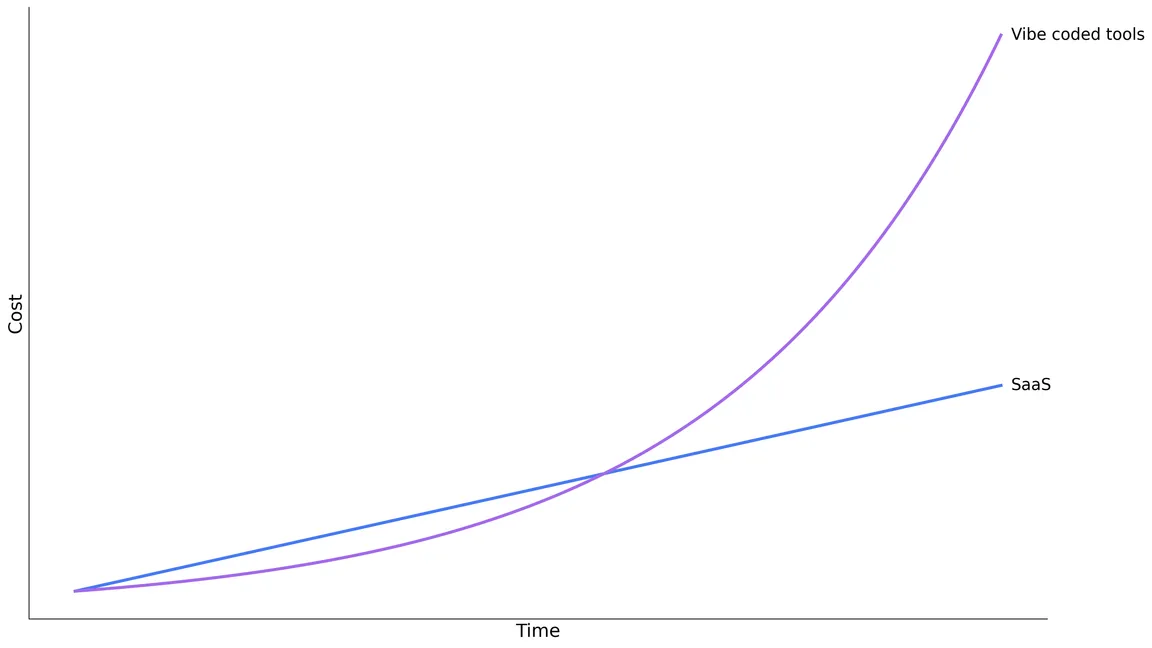
None of this means that the SaaS industry isn’t going to change though. Something is definitely happening: bad SaaS is dying.
For years, you could build a mediocre product in an uncrowded category and charge for it simply because the cost of building an alternative was high. Those days are gone. If your product is a thin wrapper around a CRUD database with a nice UI, you are indeed in trouble.
The SaaS products that will thrive are the ones where the gap between MVP and “actually good product” is enormous. Stripe. WorkOS. Cloudflare. These products are valuable because they’re hard to own. They need to accumulate thousands of correct product decisions, maintain operational excellence, evolve with a changing ecosystem, and to do all of that continuously, forever.
No pressure.